
EMME: Strategic Transport Models

The Wellington Transport Analytics Unit own and operate a range of transport models on behalf of partners. These models can be split into two types – strategic, regional transport models and local operational transport models.

The models provide the evidence base to design and evaluate policy interventions and support the development and assessment of transport projects
  • Wellington Public Transport Model (WPTM) – 2011, 2013, 2018
  • Wellington Transport Strategy Model (WTSM) -2001, 2006, 2011, 2013 and 2018
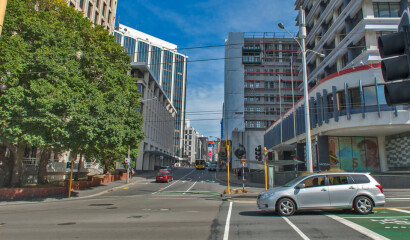
A Wellington street on a sunny day

About

The strategic transport models operate using the EMME software platform

EMME is a multi-modal transport planning software that is used worldwide. The Wellington Transport Analytics Unit have two models that have been developed in EMME – Wellington Transport Strategy Model (WTSM) and Wellington Public Transport Model (WPTM)

The software combines “off the shelf” functionality with the ability to develop a bespoke 4-stage strategic transport models (trip generation, trip distribution, mode split, assignment) to fit local data sources and analytical requirements.

INRO | Emme (inrosoftware.com)

What’s New in Emme 4.6 (inrosoftware.com)

The strategic modelling tools provide a regional representation of travel patterns, and are used for design and evaluate policy interventions and to support the assessment of transport improvement options.

The models are as follows:

  • Wellington Transport Strategy Model (WTSM) – a 4 stage demand model that is the central tool for demand forecasting
  • Wellington Public Transport Model (WPTM) – a more detailed public transport model for the development and assessment of public transport schemes
  • Wellington Traffic Assignment Model (WTAM) – a more granular traffic model for the assessment of traffic interventions and impacts”
  • Wellington Cycle Model (WCM) – a GIS based cycle model for the assessment and development of cycle improvements within the Wellington Region

These models were last updated over the period 2020 to 2023 with the purpose being improve and add functionality, refresh behaviour assumptions and identify known weaknesses to develop a set of tools that can be used for the strategic assessment of transport investment and policy.

Timeline

The Wellington Regional Transport Analytical Tools were updated over the period 2020 to 2023 with the purpose being improve and add functionality, refresh behaviour assumptions and identify known weaknesses to develop a set of tools that can be used for the strategic assessment of transport investment and policy. The regional modelling suite at completion of this project consists of:

  • Wellington Transport Strategy Model (WTSM) – a 4 stage demand model that is the central tool for demand forecasting
  • Wellington Public Transport Model (WPTM) – a more detailed public transport model for the development and assessment of public transport schemes
  • Wellington Traffic Assignment Model (WTAM) – a more granular traffic model for the assessment of traffic interventions and impacts”

2018

TN1 Specification (PDF 1.2 MB)
TN2 Time Period Analysis (PDF 2.1 MB)
TN3 Zoning (PDF 20 MB)
TN4 Data Analysis (PDF 2.8 MB)
TN5 Improve Delay Representation (PDF 6.7 MB)
TN6 Trip vs Tour Based Model Survey Summary and Decision (PDF 1.6 MB)
TN7 Parking (PDF 8.4 MB)
TN8 Wellington CBD Mode Share  (PDF 2.4 MB)
TN9 Model Input Parameters (PDF 602 KB)
TN10 Airport Model (PDF 825 KB)
TN11 Heavy Vehicle Model (PDF 3.8 MB)
TN12 Data Analysis Land Use  (PDF 1.3 MB)
TN13 Park and Ride (PDF 1.3 MB)
TN14 Ferry Model  (PDF 512 KB)
TN15 WPTM Update (PDF 4.4 MB)
TN16 Interim WTSM 2018 Validation  (PDF 2.8 MB)
TN17 Model Rebuild Specification  (PDF 1.1 MB)
TN18 Vehicle Availability Model  (PDF 1.2 MB)
TN19 Trip Production Model  (PDF 1.5 MB)
TN20 Trip Attraction Model  (PDF 1.8 MB)
TN21 Peak Periods and Vehicle Occupancy (PDF 1.2 MB)
TN22 Model Input Parameters  (PDF 741 KB)
TN23 Active Modes  (PDF 534 KB)
TN24 HTS & Mobile phone data (PDF 1.9 MB)
TN25 WTAM  (PDF 7.8 MB)
TN26 Family Structure Model  (PDF 2.2 MB)
TN27 External Light Vehicle Model  (PDF 1.1 MB)
TN28 Road Assignment  (PDF 748 KB)
TN29 PT Assignment  (PDF 1.9 MB)
TN30 Trip Distribution and Mode Choice (PDF 1.8 MB)
TN31 WTSM Validation (PDF 3.8 MB)
TN35 Income Segmentation  (PDF 820 KB)
Peer Review Summary Note (PDF 616 KB)

2017

Hutt City AIMSUN model was developed.

2016

Wellington City AIMSUN model was developed to provide a meso-scopic and micro-simulation modelling tool for Wellington City to help with the assessment and evaluation of Let’s Get Wellington Moving.

2013 WPTM WTSM Peer Review (PDF 157 KB)

2013

The most recent update of the model involved an update to the base year of WTSM and WPTM to 2013.

TN1 Data Collection (PDF 3.7 MB)
TN2 Observed Commercial Vehicle Matrix Development (PDF 4.1 MB)
TN3 Development of Base Year Networks  (PDF 598 KB)
TN4 2013 Commercial Vehicle Model (PDF 6.9 MB)
TN5 Model Input Parameters  (PDF 845 KB)
TN7 Production of 2013 Land Use Data  (PDF 298 KB)
TN8 WTSM 2013 Validation  (PDF 3.8 MB)
TN9 WPTM 2013 Validation  (PDF 3.8 MB)
TN10 WTSM WPTM Sensitivity Testing  (PDF 3.9 MB)
TN11-WTSM 2013 Demographic Report  (PDF 4 MB)
TN12 WTSM 2013 Model Testing report (PDF 3.2 MB)
TN13 WPTM 2013 Model Calibration report (PDF 2.4 MB)

2011

WTSM was updated using estimates from the 2011 Census (which was postponed due to the Christchurch earthquakes). A new public transport assignment model, Wellington Public Transport Model (WPTM) was developed in 2011 to provide a more granular representation of PT demand, using Snapper data and rail survey data, and was used for the Wellington PT Spine Study.

TN00 Model Development Report  (PDF 1.9 MB)
TN00_C3079 Model Development Report  (PDF 1.9 MB)
TN0_C3079 Model Investigation Report  (PDF 1.4 MB)
TN1 Network Preparation FINAL (PDF 6.6 MB)
TN2 Survey Sampling Methodology  (PDF 1.3 MB)
TN5a Bus Intercept Survey Analysis  (PDF 2.1 MB)
TN5b Rail Intercept Survey Analysis  (PDF 1.6 MB)
TN6 WPTM Specification (PDF 1.1 MB)
TN13 Base Model Car Ownership  (PDF 1.1 MB)
TN15 Input Parameters (PDF 2.7 MB)
TN16 WPTM and WTSM PT Assignment Comparison (PDF 1.5 MB)
TN17 Validation Guidelines and Criteria - WTSM and WPTM  (PDF 1.8 MB)
TN18 WTSM Calibration and Validation  (PDF 4.8 MB)
TN19 WPTM Calibration and Validation  (PDF 5.4 MB)
TN19 WPTM C and V Addendum (PDF 1.3 MB)
TN20 WPTM Forecasting  (PDF 1.1 MB)
TN22 WPTM Sensitivity Testing  (PDF 1.6 MB)
TN23 Future Year Base Networks and Services  (PDF 2.2 MB)
TN24 Baseline Forecasting Report  (PDF 6.9 MB)
TN29 Demographic Inputs to WTSM with Appendicies  (PDF 5.5 MB)

2006

WTSM was updated to a new 2006 baseline using Census data, with revised forecast models developed.

WTSM 2006 ARUP Peer Review  (PDF 123 KB)
WTSM 2006 Baseline Forecasting Report  (PDF 1.4 MB)
WTSM 2006 Update Validation Report  (PDF 2.2 MB)

2001

The Wellington Transport Strategy Model was initially developed in 2001, using Household Travel Survey data collected at that time as a the key data source to understand household characteristics, travel patterns and behaviours.

WTSM 2001 ARUP Forecasting Review 
WTSM 2001 ARUP Peer Review (PDF 288 KB)
WTSM 2001 TN10_1 Preliminary Studies  (PDF 2 MB)
WTSM 2001 TN11_1 Technical Design  (PDF 947 KB)
WTSM 2001 TN16_1 Trip End  (PDF 12 MB)
WTSM 2001 TN17_1 Distribution and Mode  (PDF 1 MB)
WTSM 2001 TN19_1 Time Period  (PDF 525 KB)
WTSM 2001 TN22_1 Validation Report  (PDF 830 KB)
WTSM 2001 TN24_1 Base Forecast (PDF 2.4 MB)

Waka Kotahi's logo Greater Wellington's logo Hutt City Council's logo Kāpiti Coast District Council's logo Porirua City's logo Wellington City Council's logo

We provide documentation relating to all model updates so that interested parties can understand how the models have evolved through time. Let's have a look!

Updated 11 June 2026 at 13:19